Musical Terms Grade 3 (Trinity)
For Grade Three Music Theory, you have to know all the foreign musical terms and symbols which are listed for Grades One and Two, plus the new terms listed on …
Pass Your Music Theory Exam with Confidence!
For Grade Three Music Theory, you have to know all the foreign musical terms and symbols which are listed for Grades One and Two, plus the new terms listed on …

The smallest note you will have come across in your music theory exams so far is the semiquaver. Remember that 4 semiquavers are worth 1 crotchet. A semiquaver has two …

Usually, when a composer writes a rhythm, they fit it to a time signature so that the notes which fall on the strong beats of the bar are given a little emphasis, …

In this lesson we will learn about two devices or “tools” composers use when they write music. These tools help the composer to create more ideas which are connected to …

Writing Music Neatly It is very important that you write music in a way that is easy for others to read. Practise regularly, and look back at music you have …

On From Grade One For Grade Two Music Theory, you have to know all the foreign musical terms and symbols which are listed for Grade One, and a few more. …
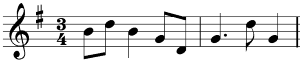
Trinity Grade 2 Composition In the grade two Trinity music theory exam, you may be asked to compose a short melody to a given rhythm. You will normally be given …

A “triplet” is a group of three notes played in the time of two. To look at how triplets work, we’ll first look at a short rhythm in 3/4 time. …
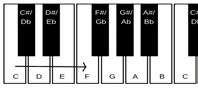
All intervals have a quality, which is another word to describe more precisely what they sound like. For Trinity grade 2, you need to know about these intervals and their …

Tonic triads are simple chords with just three notes in them. To build a tonic triad, we start by taking the first note from any scale (which is also known …