Last Updated on 9 October 2026 by Victoria Williams
AMusTCL Explained
237 pages, page size 8.5×11″
AMusTCL Explained is the first (and currently only!) complete study guide for candidates intending to take the first level Trinity Music Theory Diploma, which is the next step after passing Grade 8 Music Theory.
Find the book on Amazon here: https://link.amazon/B036E1BSU
You can also purchase the individual units as separate PDFs here: https://mymusictheory.com/music-theory-diplomas/amustcl-trinity-diploma-level-4/
Who Can Take this Exam?
There are no prerequisites for taking this exam, but there is an assumption that you have already passed grade 8. The topics in the exam follow on more naturally from Trinity Grade 8, but if you have passed ABRSM Grade 8 this will also be a good starting point. (You may, however, benefit from taking a look at the Trinity Grade 8 learning materials as an introduction – see https://courses.mymusictheory.com/courses/trinity-music-theory-grade-8)
What’s in the book?
AMusTCL Explained is organised in the same order as the exam paper.
It begins with Section A topics.
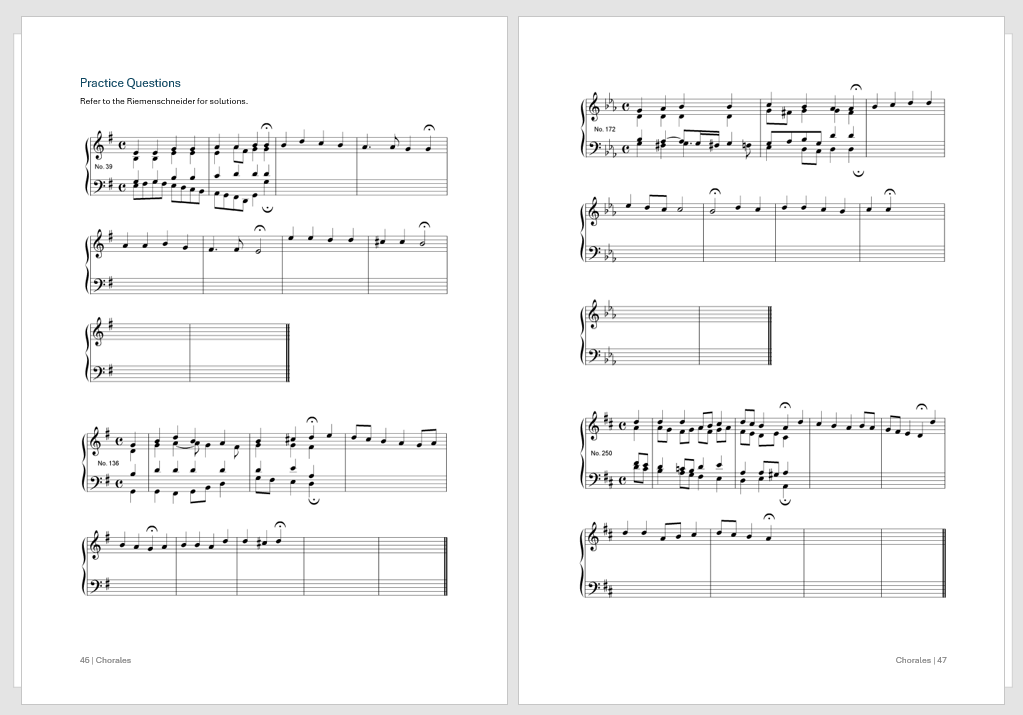
1. Baroque Chorales
Lutheran chorales form the basis of traditional SATB harmony study in the AMusTCL exam.
This unit illustrates how chorales are built, examining their melody, rhythm and harmony in great depth. We explore the handling of cadences, the full harmonic vocabulary of the Baroque era including suitable added 7th chords, and demonstrate the various types of melodic decoration (passing notes etc.) that are stylistic for the period.
This is followed by some detailed advice regarding tackling the AMusTCL chorales exam question, and practice questions are provided (along with advice on how to create your own revision material).
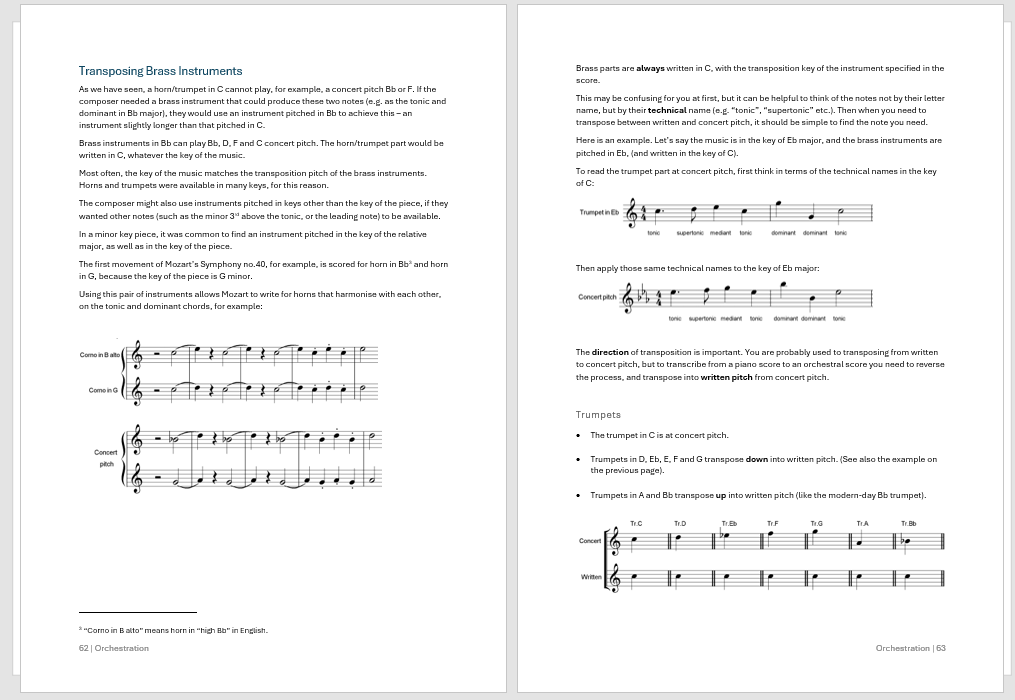
2. Classical Orchestration
In Classical Orchestration we begin by scrutinising the instruments which comprised a symphony orchestra during the 18th century. We investigate how the orchestral families combine with each other to create the light, opaque textures typical of this era and also delve into the history of brass instruments, their transposition vagaries and why they were written without key signatures.
The AMusTCL question format is broken down into an easy-to-follow process. We decode the “short-score” representation of the musical material, and clearly illustrate how to disentangle the parts to make a coherent reconstruction, including common pitfalls to avoid.
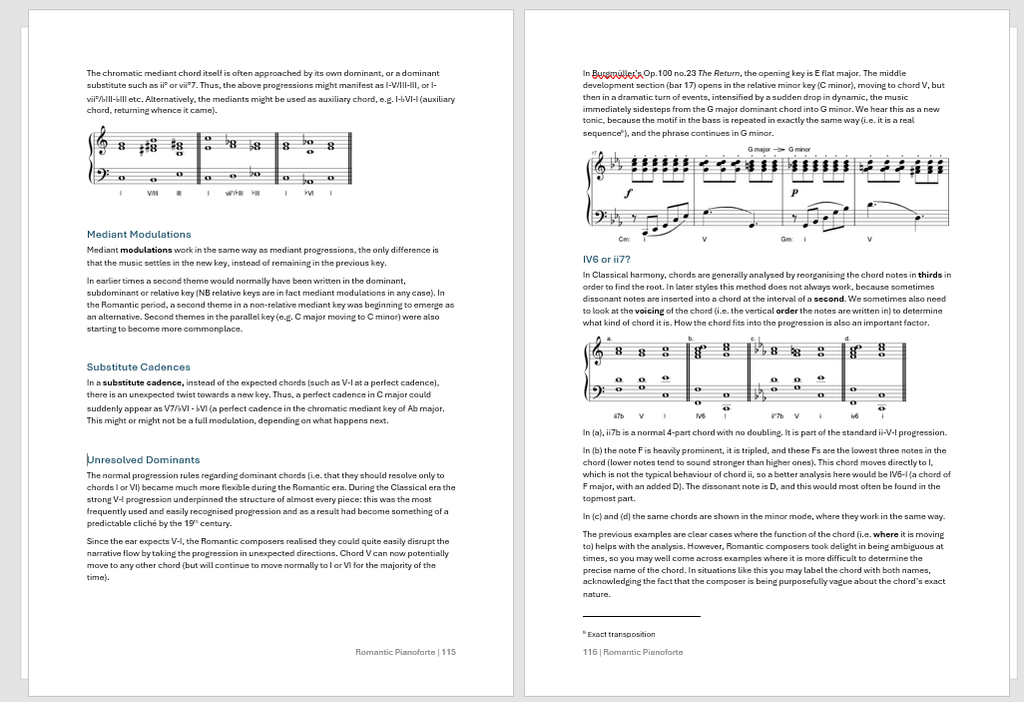
3. Romantic Pianoforte
The Romantic era option in the exam asks you to complete a piano piece in the appropriate style, making use of the common features (harmony, phrases, cadences, etc.) of the period, and those specific to the piece itself, of which fragments are supplied.
We define the Romantic era in terms of harmony, and place it in its historical context. We then expand our knowledge of the harmony used at this time, which is a transitional period between the traditional Classical era and the innovative/avant garde Modern era. Topics include mediant progressions and modulations, motifs and modal interchange.
Several complete piano pieces are given (and reading/playing lists provided for many more examples) and these are analysed in depth, looking at the architecture, structure, harmony, phrase building, ebb-and-flow, and compositional devices which help to combine musical ideas into a coherent whole. We also clarify where and why the more traditional “rules” of harmony might be relaxed in this slightly later style.
4. Popular Song
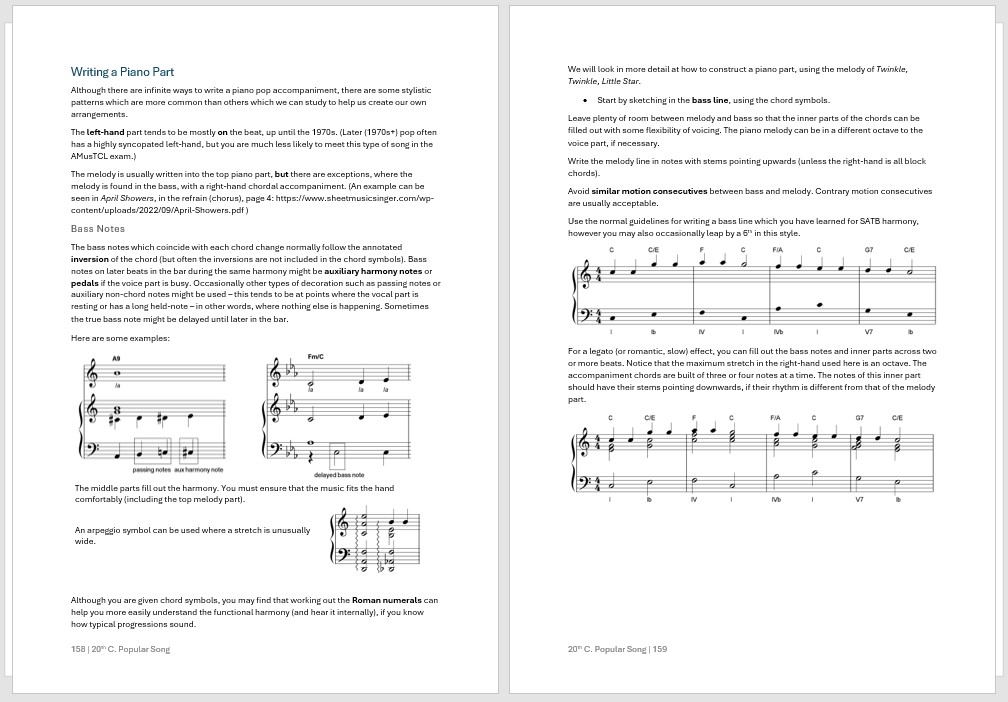
This is another piano-based question, but in a later style (20th century) and you will be writing an accompaniment part which combines with a given vocal line, including writing some of the vocal part yourself.
As with previous questions, part of an extant piece of music is provided, and the expectation is that you will complete it in a consistent style, whilst also showing your knowledge of the more modern chords used in this genre, such as jazz added 7ths, added 6th chords and tritone substitutions. A sense of musical architecture is also needed, and we throw light on how to achieved this musically.
A large number of examples of piano accompaniment styles are provided as templates, with detailed steps about how to create an accompaniment from the provided chord symbols (which are explained in full).
Full guidance is given on how to set a vocal text to musical notes by placing the stressed syllables correctly, and we will also discover some of the common mistakes that candidates make when attempting this question.
5. 20th Century Composition
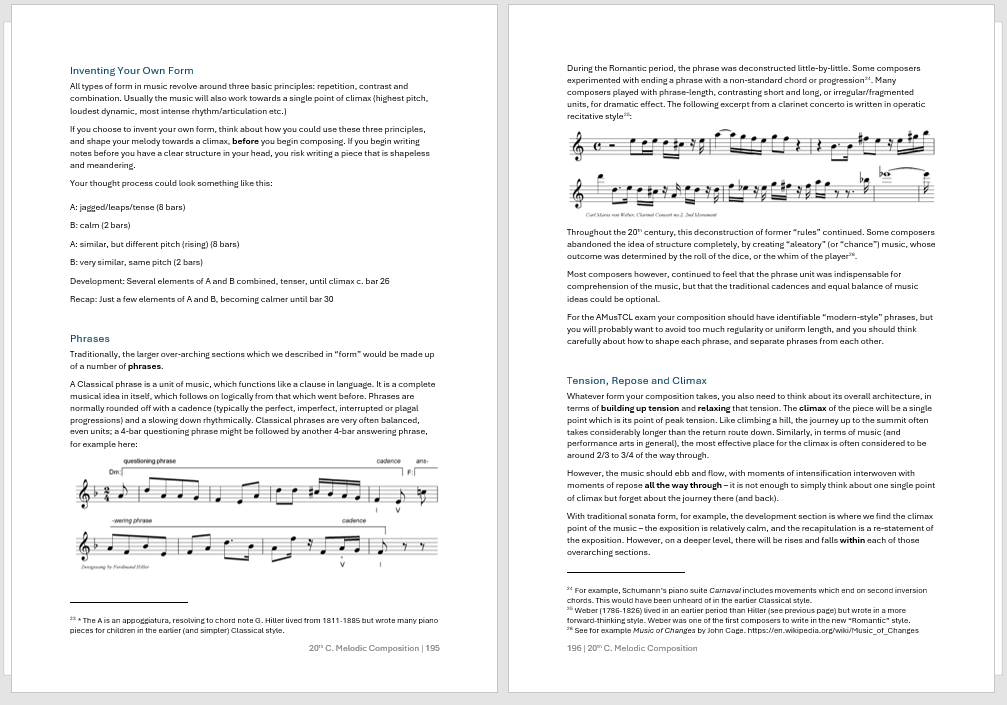
The final choice in Section A is composition of a piece for a solo instrument of your choice, based on a given opening which will be in a key system which is not part of the typical major/minor system used in Classical music.
This unit investigates a number of alternative key systems, including the folk/pop/jazz modes, whole tone scales, pentatonic music,12-tone serialism and free chromaticism. In particular we look at how to avoid sound too “traditional”.
We go into some depth to explore architecture in composition, including tension and release, how to shape phrases when traditional cadences are not available, and how to build a composition into a meaningful form, such as ABA or rondo, as well as exploring inventing new forms.
Additionally we take a brief look at modern innovations in notation which can be used to write down novel techniques, and give guidance on how to write idiomatically for any specific instrument.
Section B: Prescribed Works
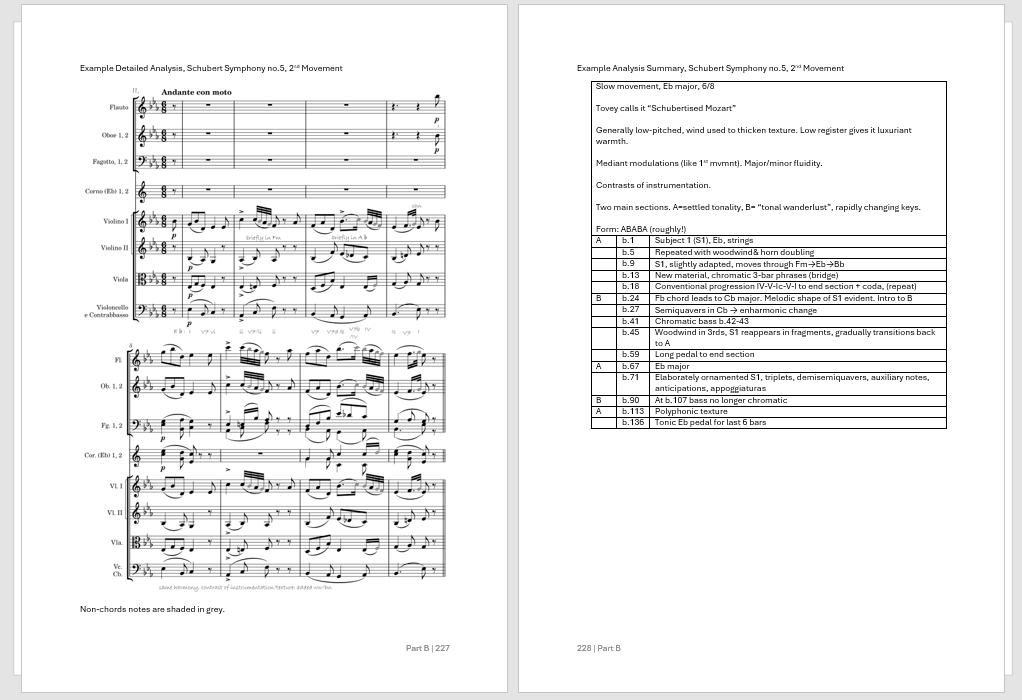
This section provides detailed guidance on how to select, research and analyse any piece on the prescribed works list. I have deliberately not given lessons on specific works since these change every few years, and (more importantly) doing your own research is part of the learning process.
This section is packed full of tips about where to find music, how to organise your studies, and precisely what questions you need to try to answer, including where you might find the answers to these questions and how to write in a clear, academic style. Clear examples are given showing how you should go about analysing your set works, as well a list of common “devices” which are likely to appear in exam questions.
Section B includes the option to write a full essay, so a lesson is devoted to planning and writing essays, with an example of a complete essay which would score well in the exam.
I very much hope you find the book useful for your studies! Your comments and questions are always welcome – find me at [email protected]