Chord VII – The Leading Note
Chord vii° (Diminished) The chord built up from the 7th degree of the scale, or leading note, is called the leading note triad, or chord vii° (“seven diminished”). The leading …
Pass Your Music Theory Exam with Confidence!
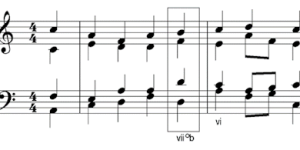
Chord vii° (Diminished) The chord built up from the 7th degree of the scale, or leading note, is called the leading note triad, or chord vii° (“seven diminished”). The leading …
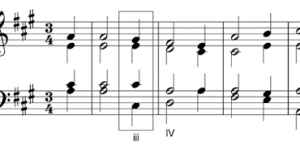
Chord III (Major Mediant) The mediant triad built from the melodic minor scale is a major chord, because the interval between the root and 5th is a perfect 5th. This …
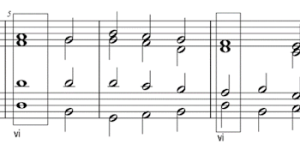
Chord VI – Submediant The chord built up from the 6th degree of the scale, or submediant note, is called the submediant triad; chord VI or vi. The submediant triad …
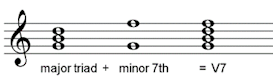
Chord V7 – Dominant 7th The dominant chord (V) was introduced at grade 5. Chord V7 is also known as the “dominant 7th” chord. It is built from the dominant …
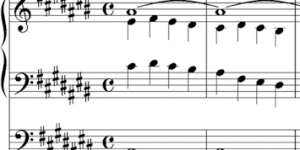
A# Minor A# minor is the relative minor key to C# major. Both have 7 sharps in the key signature. Here are the A# harmonic minor scales: And the A# …

You should already know all the keys and scales with up to six sharps or flats. In this lesson we will look at the keys with seven sharps or flats. …
Note Names in Other Languages The letter names of the notes A-G which we use in English have different names in other languages. You might see these names written in …
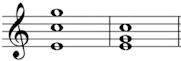
Chord Inversions The simplest way to write a chord is as a triad. A triad is a three-note chord. A chord written like this has its notes as close together …
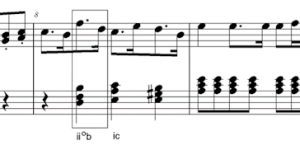
You should already be familiar with the tonic, dominant and subdominant chords/triads. If not, please see Triads and Chords before reading this lesson! The chord built up from the 2nd …

In a music theory exam, you might be asked to change an open score (4 staves) into a close score (2 staves), or vice versa. A close score can also …