Progressions and Inversions
Bass Line When we harmonise a melody and select chords with specific inversions, the end result is a bass line. For example, choosing the following chords/inversions to harmonise this C …
Pass Your Music Theory Exam with Confidence!
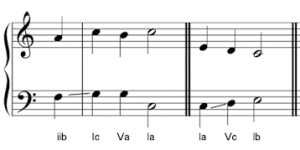
Bass Line When we harmonise a melody and select chords with specific inversions, the end result is a bass line. For example, choosing the following chords/inversions to harmonise this C …
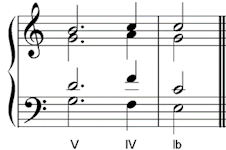
A passing chord is a decorative chord which does not affect the overall harmonic structure of the music – it is like a passing note[1], but written as a whole …
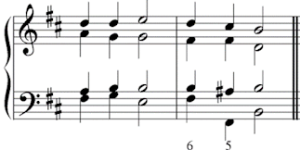
Another way of saying “2nd inversion chord” is “6/4 chord”, because the chord is built of a bass note plus the notes a 4th and a 6th higher. For example, …
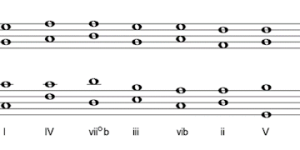
Primary Chord Progressions In earlier lessons we learned about cadences and pre-cadence chords. The cadence chord progressions are all very common, whether they are used at a cadence or elsewhere …
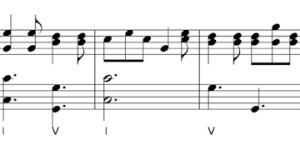
Most music uses a variety of different chords. This piece is in C major. The first beat of bar 1 uses the notes from the C major tonic triad. We …
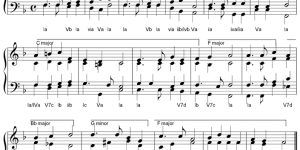
You should already have a basic understanding of chord inversions (root position, first inversion and second inversion). For a reminder, see Chord Inversions. In this lesson we’ll learn a little …
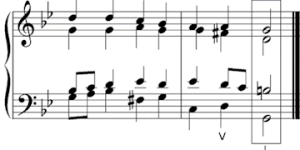
Pieces of music composed in a minor key sometimes end on a major tonic chord, and this was particularly common in the Baroque era (c. 1600-1750). A major chord used …
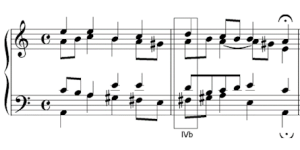
Although in minor keys we usually use the notes from the harmonic minor scale to build the subdominant chord, it’s also possible to build a different chord, using the notes …
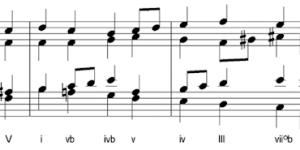
Although in minor keys we usually use the notes from the harmonic minor scale to build the dominant chord, it’s also possible to build a different kind of dominant chord, …
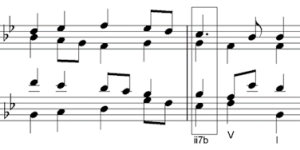
Chord ii7 is also known as the supertonic 7th chord. It’s built from the supertonic triad, plus another third added on top: the 2nd, 4th, 7th and 1st notes of …