Ornaments (Symbols)
Ornaments are symbols that tell the player to change the written note in a specific way. Some ornaments are written on the stave itself, while others are written above it. …
Pass Your Music Theory Exam with Confidence!
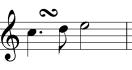
Ornaments are symbols that tell the player to change the written note in a specific way. Some ornaments are written on the stave itself, while others are written above it. …
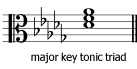
The alto clef is a type of C clef. It’s a clef which tells you where middle C is located on the stave. (It’s not the only C clef – …
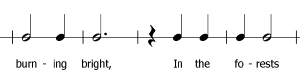
In this lesson we will look at how to set words to a rhythm. This question sometimes comes up in the Trinity Grade 4 Music Theory Exam. Stressed Syllables The …

We have already learnt about triplets. Just to refresh your memory, triplets are used when we want to play three notes in the space where there would normally be two: The …
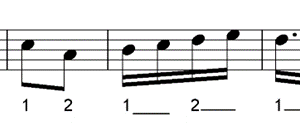
Most time signatures that we meet in the music we play with a lower number 8, are compound time, but there are also simple time signatures with an 8 below. …
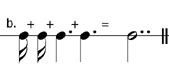
Double Dots A single dot to the right of a note head increases the length of the note by 50% (the note plus half of itself). So, a dotted minim …

Breves The longest note we have come across in earlier theory grades is the semibreve (whole note)- written as an open note-head without a stem. We’ll now learn about a …

Working out intervals in the alto clef can be awkward if you don’t read the clef fluently. If you are not fast at working in alto clef, it’s usually better …
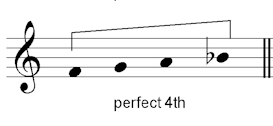
So far, we have only learned about intervals between the tonic (lower noter in the interval) and another note in the major or minor scale built on that note. In …
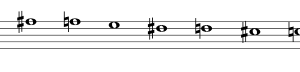
The word “chromatic” actually means “colourful” – the scales are very colourful since they use ALL 12 different notes available in one octave, instead of just 7 of them! The …