Musical Terms Grade 6 (ABRSM)
You can expect just about any musical term or symbol to crop up in a grade six music theory exam! Here is a list of terms, organised into groups. However, …
Pass Your Music Theory Exam with Confidence!

You can expect just about any musical term or symbol to crop up in a grade six music theory exam! Here is a list of terms, organised into groups. However, …

Free ABRSM Grade 6 Music Theory Test PDF Download a free PDF ABRSM Grade 6 test here. Answers are supplied for Q4 and Q5. For Qs1-3 answers will vary.
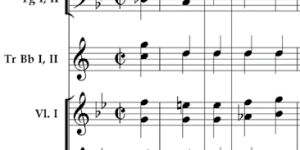
Chords in Orchestral Scores In the ABRSM Grade 6 music theory exam you will be probably be asked to identify one or more chords in a score. For this grade, …

The most commonly found orchestral percussion instrument is the timpani (kettle drums). A kettle drum is tuned to a single note. Often an orchestral score will ask for two or …
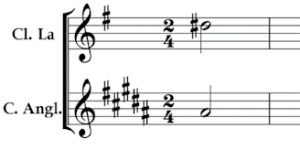
Intervals in a score When working out intervals in a musical score, you need to check if the notes are in different clefs, or need to be transposed, before you …
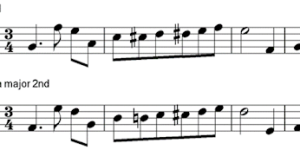
Transposition in Q4 and Q5 In the grade 6 ABRSM Music Theory exam you will definitely be asked to transpose a few bars of music from an orchestral score. Most …
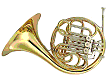
The Orchestral Brass Section In a score, horns are at the top of the brass section, followed by trumpets, trombone and tuba. Trumpets in Bb and horns in F are …

Standard woodwind section (from Classical era) Extended woodwind section (from Romantic era) More Facts “a2” or “zu” means “both players” “solo” or “I” or “II” (etc.) means one player Stems …
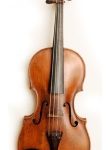
Standard Instruments Open String Tunings When a string player plays a note without pressing a finger down anywhere on the string, this is called an “open note”. If the player …
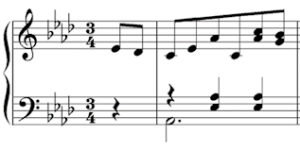
Identifying the Era of a Score In your music theory exam you may be asked to identify the era or possible composer of a score you have not seen before. …