The Modern Era
Modern music is defined by a general abandonment of the rules that were laid down in earlier times. Where Romantic music had irregular phrase lengths, modern music often goes one …
Pass Your Music Theory Exam with Confidence!
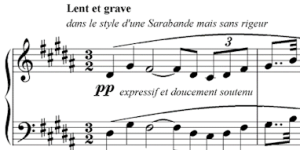
Modern music is defined by a general abandonment of the rules that were laid down in earlier times. Where Romantic music had irregular phrase lengths, modern music often goes one …
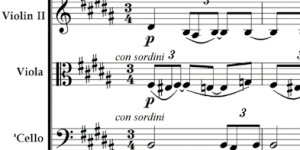
The Romantic era in music was (roughly) between the years 1830 to 1900. Some of the most famous composers of this era are: Robert Schumann, Edward Elgar, Frédéric Chopin, Felix …

The Classical era in music was (roughly) between the years 1750 to 1830. Some of the most famous composers of this era are: W.A. Mozart, Franz Schubert, Joseph Haydn, Muzio …
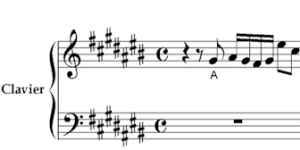
The Baroque Era The Baroque era in music was (roughly) between the years 1600 to 1750. Some of the most famous composers of this era are: J.S. Bach, Henry Purcell …

Homophonic and Polyphonic The words homophonic and polyphonic describe two ways a piece of music can be layered to create different textures. Homophonic describes music that has one main melody, …
On this page you can download a free PDF with ABRSM Grade 6 Composition questions to practise at home. Click the image below to download a free PDF! Preparation Task:
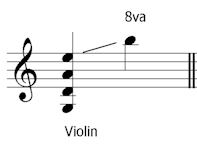
Instrument Ranges for Composers You need to learn the lowest playable note on each orchestral instrument, so that you are able to write a composition which stays in range. (In …
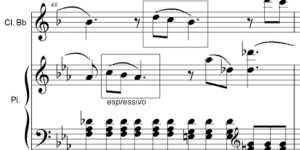
Motifs A motif is an easy to recognise, short musical idea, which is used to generate new music in a composition. Using the similar motifs throughout a composition helps to …
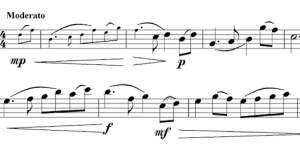
Marking Criteria In the ABRSM grade 6 exam you are asked to finish a composition from a given opening. The given opening is around two bars, and the complete composition …

Pivot Chords A pivot is a chord which belongs to both the old and new keys. Pivot chords can make modulations smoother, but it is not essential to use a …