Tierce de Picardie
Pieces of music composed in a minor key sometimes end on a major tonic chord, and this was particularly common in the Baroque era (c. 1600-1750). A major chord used …
Pass Your Music Theory Exam with Confidence!
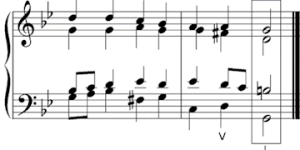
Pieces of music composed in a minor key sometimes end on a major tonic chord, and this was particularly common in the Baroque era (c. 1600-1750). A major chord used …
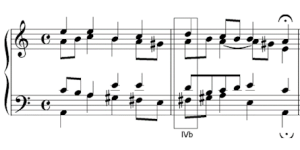
Although in minor keys we usually use the notes from the harmonic minor scale to build the subdominant chord, it’s also possible to build a different chord, using the notes …
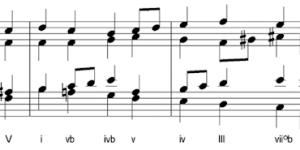
Although in minor keys we usually use the notes from the harmonic minor scale to build the dominant chord, it’s also possible to build a different kind of dominant chord, …
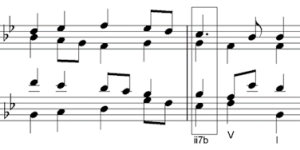
Chord ii7 is also known as the supertonic 7th chord. It’s built from the supertonic triad, plus another third added on top: the 2nd, 4th, 7th and 1st notes of …
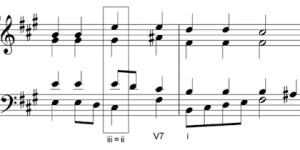
For the ABRSM Grade 6 Music Theory exam you will need to have a good understanding of ALL diatonic chords, in ALL keys. Naming Chords You need to know how …
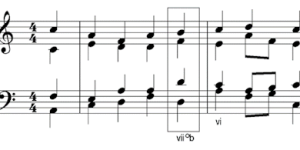
Chord vii° (Diminished) The chord built up from the 7th degree of the scale, or leading note, is called the leading note triad, or chord vii° (“seven diminished”). The leading …
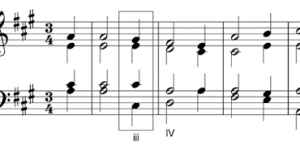
Chord III (Major Mediant) The mediant triad built from the melodic minor scale is a major chord, because the interval between the root and 5th is a perfect 5th. This …
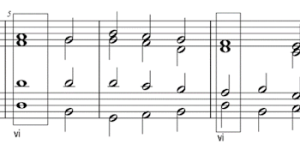
Chord VI – Submediant The chord built up from the 6th degree of the scale, or submediant note, is called the submediant triad; chord VI or vi. The submediant triad …
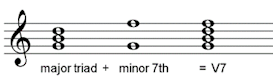
Chord V7 – Dominant 7th The dominant chord (V) was introduced at grade 5. Chord V7 is also known as the “dominant 7th” chord. It is built from the dominant …

Cadences “Chord progression” means “series of chords which follow each other”. For example, I-IV-V-I is a chord progression. A cadence is a combination of specific chords which tells the listener …