Unaccented Passing Notes
Passing notes are non-chord notes which are approached and quit by step in the same direction. They can be either accented or more usually, unaccented. Unaccented passing notes are the …
Pass Your Music Theory Exam with Confidence!
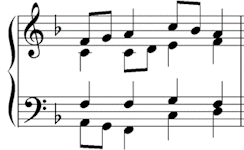
Passing notes are non-chord notes which are approached and quit by step in the same direction. They can be either accented or more usually, unaccented. Unaccented passing notes are the …
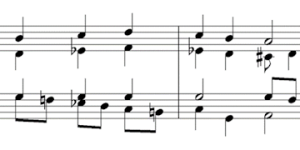
Introduction to Decoration Most music that you listen to will sound a little more complicated than just a succession of chords. One way to add extra sparkle is to add …

Normally at the end of a phrase we find some type of cadence. If chord V (or V7) is used as the penultimate chord, the final chord of the phrase …
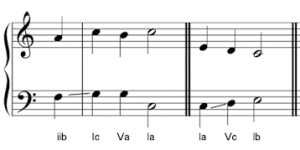
Bass Line When we harmonise a melody and select chords with specific inversions, the end result is a bass line. For example, choosing the following chords/inversions to harmonise this C …
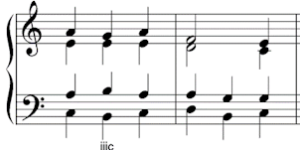
Auxiliary 6/4 An auxiliary chord is one which is inserted between two identical chords. Like the passing chord, it does not disrupt the “true” progression, but instead works as a …
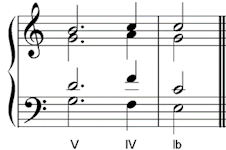
A passing chord is a decorative chord which does not affect the overall harmonic structure of the music – it is like a passing note[1], but written as a whole …
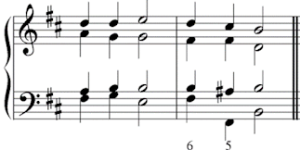
Another way of saying “2nd inversion chord” is “6/4 chord”, because the chord is built of a bass note plus the notes a 4th and a 6th higher. For example, …
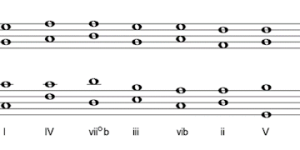
Primary Chord Progressions In earlier lessons we learned about cadences and pre-cadence chords. The cadence chord progressions are all very common, whether they are used at a cadence or elsewhere …
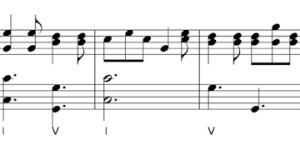
Most music uses a variety of different chords. This piece is in C major. The first beat of bar 1 uses the notes from the C major tonic triad. We …
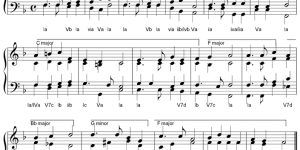
You should already have a basic understanding of chord inversions (root position, first inversion and second inversion). For a reminder, see Chord Inversions. In this lesson we’ll learn a little …