Chord IV (Major Subdominant; Melodic Minor)
Although in minor keys we usually use the notes from the harmonic minor scale to build the subdominant chord, it’s also possible to build a different chord, using the notes …
Pass Your Music Theory Exam with Confidence!
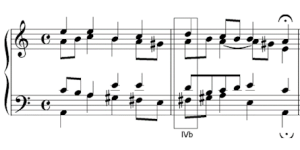
Although in minor keys we usually use the notes from the harmonic minor scale to build the subdominant chord, it’s also possible to build a different chord, using the notes …
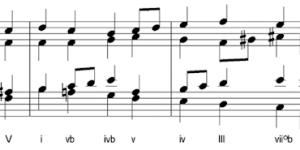
Although in minor keys we usually use the notes from the harmonic minor scale to build the dominant chord, it’s also possible to build a different kind of dominant chord, …
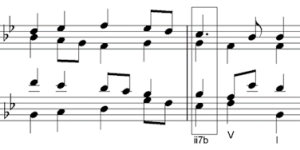
Chord ii7 is also known as the supertonic 7th chord. It’s built from the supertonic triad, plus another third added on top: the 2nd, 4th, 7th and 1st notes of …
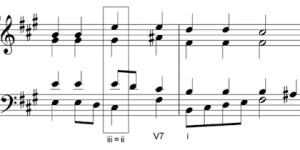
For the ABRSM Grade 6 Music Theory exam you will need to have a good understanding of ALL diatonic chords, in ALL keys. Naming Chords You need to know how …
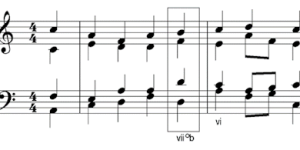
Chord vii° (Diminished) The chord built up from the 7th degree of the scale, or leading note, is called the leading note triad, or chord vii° (“seven diminished”). The leading …
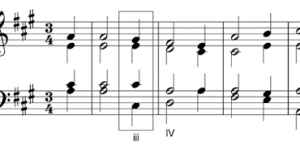
Chord III (Major Mediant) The mediant triad built from the melodic minor scale is a major chord, because the interval between the root and 5th is a perfect 5th. This …
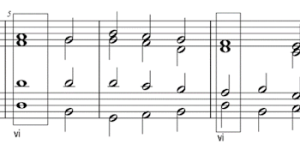
Chord VI – Submediant The chord built up from the 6th degree of the scale, or submediant note, is called the submediant triad; chord VI or vi. The submediant triad …
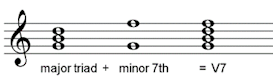
Chord V7 – Dominant 7th The dominant chord (V) was introduced at grade 5. Chord V7 is also known as the “dominant 7th” chord. It is built from the dominant …
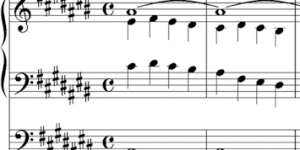
A# Minor A# minor is the relative minor key to C# major. Both have 7 sharps in the key signature. Here are the A# harmonic minor scales: And the A# …

You should already know all the keys and scales with up to six sharps or flats. In this lesson we will look at the keys with seven sharps or flats. …