Step 5: Momentum (Trio Sonatas)
Step 5. Momentum At this stage your Trio Sonata should look almost complete, but it is probably not quite finished yet. In this step we will ensure there is sufficient …
Pass Your Music Theory Exam with Confidence!
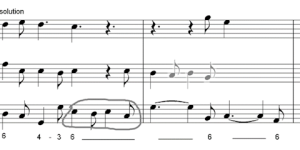
Step 5. Momentum At this stage your Trio Sonata should look almost complete, but it is probably not quite finished yet. In this step we will ensure there is sufficient …
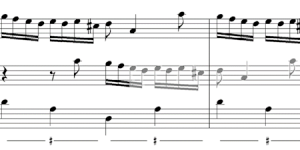
Step 4. Patterns By this stage you will normally have been able to complete a large portion of the exercise already, but there are likely to still be some larger …
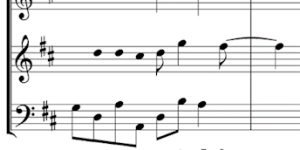
Step 3. Roots, Thirds and Fifths The next step is to look at each chord, aiming to find which part the root and third belong to. Work backwards from the …
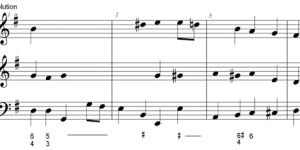
Step 2. Leading Notes In a three-part texture like a Trio Sonata, the leading note will normally rise by a semitone to the tonic, even in an inner part. The …
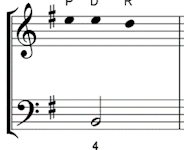
Step 1. Dissonances When we tackle a grade 8 Trio Sonata question, we should begin with the dissonances because the treatment of dissonance in the Baroque era was strict, which …
Next lesson → Step 1. Dissonances in Trio Sonatas What is a Trio Sonata? The first question in the ABRSM Grade 8 Music Theory exam is based on a Baroque …

Harmonic Analysis with Decoration When we analyse chromatic music, we need to begin by separating the layers of music (bass, melody and any middle parts), to work out a functional …

Harmonic Rhythm Harmonic rhythm is the rhythm created by each chord change. The harmony might change with each bar, twice a bar, with each beat, or perhaps every two bars …

Inverted Cadences Standard cadences use root position chords, but sometimes cadences with first inversion chords can be used. These are known as inverted cadences. Inverted cadences are unlikely to appear …

Dissonant Melodic Intervals Augmented and diminished melodic intervals are uncommon but do sometimes occur. Dissonances should resolve by step: move from the dissonance to the nearest possible note. In most …