More Compound Time Signatures
Compound /4 Time Signatures Time signatures with 6, 9 or 12 on top and 4 below are compound time. They work very much like their compound /8 counterparts (6/8, 9/8 …
Pass Your Music Theory Exam with Confidence!
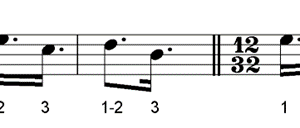
Compound /4 Time Signatures Time signatures with 6, 9 or 12 on top and 4 below are compound time. They work very much like their compound /8 counterparts (6/8, 9/8 …
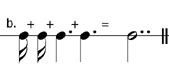
Double Dots A single dot to the right of a note head increases the length of the note by 50% (the note plus half of itself). So, a dotted minim …

Breves The longest note we have come across in earlier theory grades is the semibreve (whole note)- written as an open note-head without a stem. We’ll now learn about a …
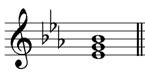
We have already learnt about tonic triads – how we can build a simple three-note chord based on the tonic of the key. For example, the tonic triad in the key …
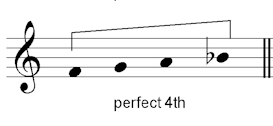
So far, we have only learned about intervals between the tonic (lower noter in the interval) and another note in the major or minor scale built on that note. In …
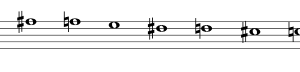
The word “chromatic” actually means “colourful” – the scales are very colourful since they use ALL 12 different notes available in one octave, instead of just 7 of them! The …

You should already know the keys with 4 sharps/flats. In this lesson we will learn about the four keys that have five sharps or flats in the key signature. They …
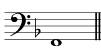
Technical names Each note of a scale can be given a number from 1-7. For example, in the key of C major, C=1st, D=2nd and so on. These are called …

Double Sharps The sharp symbol (#) raises the pitch of a note by a semitone (or “half step”). D# is one semitone higher than D, and F# is one semitone …

ABRSM Syllabus (2020+) Trinity Candidates: download practice tests from Trinity here: http://www.trinitycollege.co.uk/site/?id=1256 Answer all questions. You have 1 hour and 30 minutes. Scoring: 50/75=Pass, 60/75=Merit and 65/75=Distinction 1. Add the …