Secondary Dominants
Any major or minor chord can be approached by its own temporary dominant or dominant 7th chord, which is called a “secondary dominant”. The most frequently seen secondary dominant is …
Pass Your Music Theory Exam with Confidence!
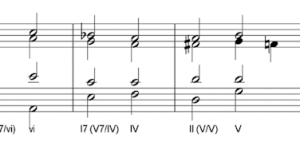
Any major or minor chord can be approached by its own temporary dominant or dominant 7th chord, which is called a “secondary dominant”. The most frequently seen secondary dominant is …
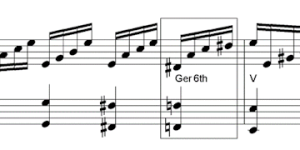
By the time you reach ABRSM Grade 8 Music Theory, the syllabus asks that you understand “all standard diatonic and chromatic chords“. You will need to be able to recognise …
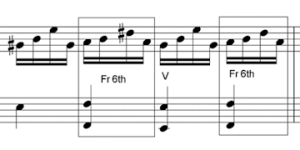
Augmented 6th Chords There are three chromatic chords which contain the interval of an augmented 6th; the Italian 6th, French 6th and German 6th, collectively known as the “augmented 6th …
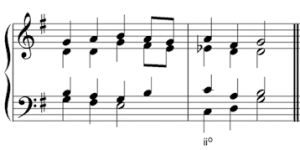
Parallel Keys Parallel keys are the major and minor using the same tonic, for example C major and C minor are parallel keys. Sometimes parallel keys use enharmonic equivalents, to …
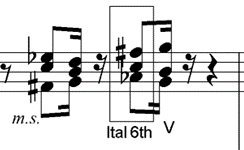
Chromatic Chords Diatonic chords are the ones which are built from the scale of the prevailing key. Chromatic chords use one or more notes which do not exist in the …
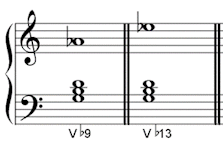
Extended Dominants (V9, V11, V13) The dominant chord can be extended further than the usual addition of a 7th (V7). By continuing to add the note a third higher each …
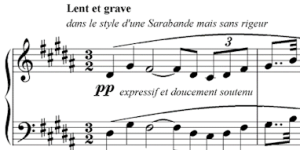
Modern music is defined by a general abandonment of the rules that were laid down in earlier times. Where Romantic music had irregular phrase lengths, modern music often goes one …
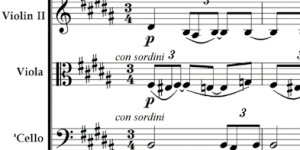
The Romantic era in music was (roughly) between the years 1830 to 1900. Some of the most famous composers of this era are: Robert Schumann, Edward Elgar, Frédéric Chopin, Felix …

The Classical era in music was (roughly) between the years 1750 to 1830. Some of the most famous composers of this era are: W.A. Mozart, Franz Schubert, Joseph Haydn, Muzio …
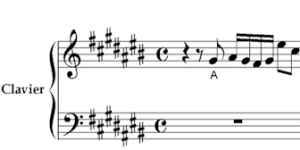
The Baroque Era The Baroque era in music was (roughly) between the years 1600 to 1750. Some of the most famous composers of this era are: J.S. Bach, Henry Purcell …