Last Updated on 6 May 2026 by Victoria Williams
Scales
In music, a scale is just a series of notes in a particular pattern, like this one. This is the scale of C major:
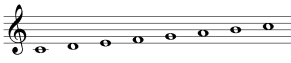
All major scales have the same pattern of tones and semitones between the notes: TTS TTTS. (A semitone is the smallest distance between two notes, e.g. E-F or G-Ab). A tone = two semitones).
Here is the scale of G major:

G major needs F sharp, to make the semitone step between the top two notes of the scale.
Scales have two main purposes – musicians practise playing them, because scale practice is a great way to strengthen the muscles you use when you play your instrument and knowing your scales makes sight reading easier.
Secondly, scales are the backbone of most music in Western Civilisation. The notes of a scale are re-organised to make a melody which is in a particular key.
Keys
The notes you saw at the top of the page make up the scale of C major – it’s a particular pattern of tones and semitones, which starts and ends on the note C. We can reorganise these same notes in different ways to produce tunes, which are in the key of C major.

Notice that the music feels like it’s arrived home when we hear the note C – this is the note that makes the music feel finished.
Here is the same tune, but now in G major.

So, key and scales work together in music. A scale is a pattern of notes which you can use to write a piece of music in a particular key.
Learn more about scales and keys in the MyMusicTheory Grade 1 Video course!
View the Complete Grade 1 Music Theory Video Course